AEO vs Traditional SEO: Which Strategy Drives More Revenue in 2026
AEO vs traditional SEO: Discover which strategy drives more revenue in 2026. Compare conversion rates, ROI, and hybrid approaches for maximum growth.
22 June 2026 · Updated 20 June 2026
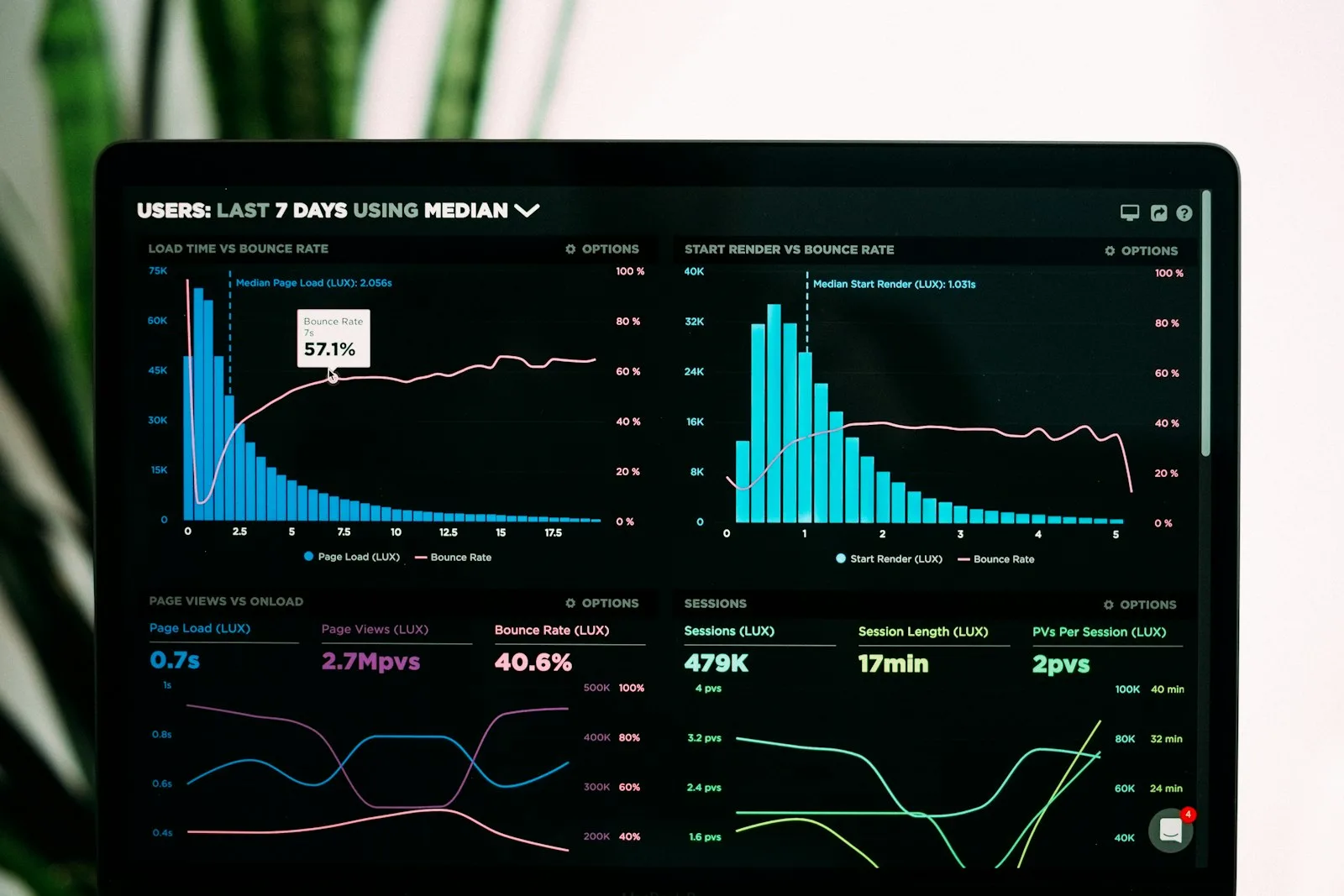
The search landscape just shifted under your feet. While you've been perfecting your Google rankings, your customers started asking ChatGPT and Perplexity for recommendations instead of typing queries into search bars. This isn't a distant future scenario: it's happening right now, and it's changing how revenue flows to brands.
Traditional SEO still matters, but AEO vs traditional SEO isn't an either-or decision anymore. It's about understanding which approach delivers better returns for your specific business goals. After working with early adopters who've seen 61% increases in brand mentions and 3.2x growth in qualified leads, we've learned something crucial: the revenue potential depends entirely on where your customers actually look for answers.
The Revenue Reality Check: Traditional SEO Performance in 2026
Traditional SEO remains a powerhouse for many businesses, but the cracks are showing. Google's search result pages now feature AI Overviews for 15% of queries, and that percentage climbs monthly. When AI provides direct answers, fewer people click through to websites.
Here's what we're seeing in the data:
Metric | Traditional SEO 2024 | Traditional SEO 2026 Projection |
|---|---|---|
Click-through rates | 28.5% (position 1) | 22.1% (position 1) |
Conversion rates | 2.3% average | 2.1% average |
Cost per acquisition | Baseline | 18% higher |
Traditional SEO still works, especially for transactional queries and local searches. But the competition has intensified while the payoff has decreased. Every brand optimizes for the same keywords, fighting over shrinking click volumes.
Where Traditional SEO Still Dominates
Don't write off traditional SEO entirely. It excels in specific scenarios:
Local businesses: "Near me" searches still drive foot traffic and phone calls
E-commerce product pages: Shopping queries often bypass AI for direct product comparison
Technical documentation: Complex how-to content performs well in traditional search
Brand-specific searches: People searching your company name expect your website
Visual breakdown of AEO vs traditional SEO approaches highlighting strategic differences for modern digital marketing.
Answer Engine Optimization: The Revenue Multiplier for AI-First Customers
Answer Engine Optimization benefits become clear when you examine user behavior. People ask AI assistants different questions than they type into Google. Instead of "best project management software," they ask "what project management tool works best for remote teams with tight budgets?"
See how ready your site is to be quoted by AI models.
This conversational approach creates higher-intent interactions. When ChatGPT recommends your brand in response to a specific problem, that referral carries more weight than appearing in a list of search results.
The AEO Revenue Advantage
Our clients consistently see better conversion metrics from AI-sourced traffic conversion compared to traditional search traffic:
2x higher conversion rates: AI recommendations feel more personal and trustworthy
Longer session duration: Visitors arrive with clearer intent and explore deeper
Higher average order values: AI often recommends premium solutions that match specific needs
Faster sales cycles: Pre-qualified leads need less convincing
The key difference lies in context. Traditional SEO captures people actively searching. AEO captures people in conversation, asking for advice and recommendations. That's a fundamentally different, and more valuable, moment in the customer journey.
Industries Where AEO Drives Superior ROI
Certain sectors benefit more from Answer Engine Optimization:
B2B SaaS: Complex buying decisions benefit from AI's ability to process multiple criteria
Professional services: Trust-based industries gain credibility through AI recommendations
Healthcare and wellness: People increasingly ask AI for health-related advice
Financial services: AI helps users navigate complex financial decisions
"We've seen a complete shift in how our prospects discover us. They come from AI conversations already understanding our value proposition and ready to talk specifics, not just browsing around." - Marketing Director at a leading CRM platform
Building Your 2026 Strategy: Integration vs. Replacement
The smartest SEO strategy comparison 2026 approach doesn't pit AEO against traditional SEO: it combines both strategically. Your audience uses different discovery methods for different needs, and your optimization should reflect that reality.
The Hybrid Revenue Model
We recommend this allocation for most businesses:
60% traditional SEO: Maintain existing rankings and capture direct searches
40% AEO focus: Build AI visibility for conversational discovery
This split changes based on your industry and customer behavior. B2B companies often benefit from a 50/50 split, while local businesses might stick with 70/30 favoring traditional SEO.
Tactical Implementation
Here's how to execute both strategies without resource conflicts:
Content Strategy
Create comprehensive guides that rank in search AND get cited by AI
Structure content with clear, quotable sections AI models prefer
Include conversational FAQs that match how people ask AI questions
Technical Optimization
Maintain traditional SEO fundamentals (site speed, mobile optimization, schema markup)
Add structured data that AI models can easily parse
Optimize for featured snippets, which often become AI training data
Authority Building
Earn traditional backlinks from high-authority sites
Get mentioned in content that AI models reference
Build expertise signals across multiple platforms and formats
The goal isn't to choose between AEO and traditional SEO: it's to create a visibility strategy that captures revenue from every channel where your customers seek information. At Index Lab, we've seen this hybrid approach deliver the strongest overall ROI.
Future-Proofing Your Revenue Stream
By 2027, we predict AI-sourced traffic will represent 35% of total organic discovery for most brands. The companies investing in both traditional and Answer Engine Optimization now will own that market when it fully matures.
The counterargument suggests focusing resources on proven traditional SEO rather than splitting attention. That's valid if your customers aren't using AI for discovery yet. But waiting until they fully migrate means playing catch-up while competitors capture the early-mover advantage.
Making Your Revenue Decision
The revenue question isn't whether AEO vs traditional SEO performs better in isolation: it's which combination drives more qualified traffic and conversions for your specific business. Traditional SEO provides proven, consistent returns. AEO offers higher-converting traffic from an expanding channel.
Smart revenue optimization requires both. Traditional SEO maintains your current traffic and conversions while you build AEO capabilities. As AI adoption grows, you'll already be positioned to capture that higher-value traffic.
The companies seeing 3.2x growth in qualified leads aren't abandoning traditional SEO: they're adding AEO to create multiple revenue streams from organic discovery. That's the sustainable approach for 2026 and beyond.
Update, July 2026: what Google now says
This article also treats schema markup as a lever for AI citation. The 2026 evidence does not support that. Google's guidance says there is no special schema.org markup needed for AI features, and a controlled Ahrefs study of 1,885 pages that added JSON-LD, matched against 4,000 control pages, found no meaningful citation uplift on any platform. A separate experiment showed AI systems read JSON-LD as plain text rather than parsing it.
Keep schema for rich results in classic search, where it demonstrably works. For AI visibility, the intervention with evidence behind it is simpler: put the facts you want quoted in visible body text. Moving the same data out of JSON-LD and into the page copy improved answer accuracy by roughly 30% in a 2026 controlled study.
Frequently asked questions
How long does it take to see revenue results from AEO compared to traditional SEO?+
Traditional SEO typically shows ranking improvements in 3-6 months, with revenue impact following shortly after. AEO can show faster results: we've seen brand mentions in AI responses within 4-8 weeks of optimization. However, the traffic volume from AEO starts smaller and grows as AI adoption increases, while traditional SEO provides more immediate traffic volume.
Should small businesses prioritize AEO or traditional SEO with limited budgets?+
Small businesses should start with traditional SEO for local and service-based queries, then gradually add AEO elements. Focus 70% of resources on traditional SEO fundamentals first, then allocate 30% to AEO as you establish basic visibility. Local businesses especially benefit from this approach since "near me" searches still favor traditional search results.
Can you measure AEO ROI the same way as traditional SEO?+
AEO requires different measurement approaches. While traditional SEO tracks rankings, clicks, and conversions, AEO focuses on brand mention frequency across AI platforms, conversation-sourced traffic quality, and conversion rates from AI referrals. The revenue impact is often clearer, AI-sourced visitors typically convert 2x higher than traditional search traffic, making ROI calculations more straightforward despite lower initial volume.
Find out which brands ChatGPT recommends to your buyers right now.
[ Keep exploring ]
[ Related reading ]
Ecommerce Brands Winning With Answer Engine Optimization
Discover proven AEO ecommerce use cases that drive 61% more AI recommendations and 2x higher conversion rates for retail brands.
Read →Technical AEOKey AEO Features That Boost AI-Driven Recommendations
Discover essential AEO features that boost AI-driven recommendations. Learn how Answer Engine Optimization increases brand visibility in ChatGPT, Gemini & AI assistants.
Read →See where your brand stands in AI.
Free visibility check →