
Rank trackers may be undercounting AI Overviews, Nozzle analysis finds
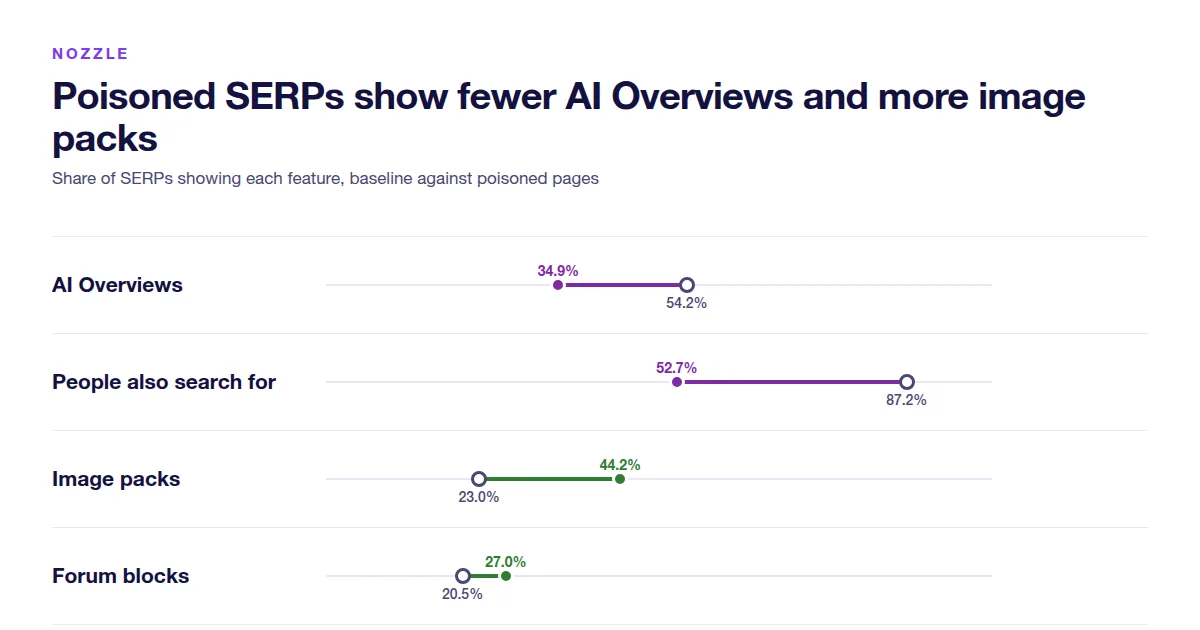
Nozzle says Google has served altered results pages to some automated searches since September 20th. Those pages show AI Overviews 34.9% of the time, against 54.2% in its baseline.
Guilherme Hortinha · 15 October 2026
Can your business run ChatGPT Ads? Check in 10 seconds.
Google has been sending altered results pages to some automated searches since September 20th. That finding comes from an analysis by enterprise rank-tracking firm Nozzle, reported by Search Engine Journal. Nozzle calls these pages poisoned. Each one is a complete page with the wrong results, and nothing on the page says so.
If you track AI Overview presence or citations with a tool that scrapes Google, this affects your numbers.
What Nozzle measured
Every figure below is Nozzle's, measured on the SERPs it collected.
Poisoned pages peaked at 25% of results. Since October 1st they have made up between 5 to 11% of results per day.
AI Overviews appear on 34.9% of poisoned SERPs, against 54.2% in the baseline.
"People also search for" appears on 52.7% of poisoned SERPs, against 87.2% in the baseline.
Image packs appear on 44.2% of poisoned SERPs, against 23.0%. Forum blocks appear on 27.0%, against 20.5%.
Normal results keep 88.5% of the same websites across repeated searches. Poisoned results keep 20.7%.
Local tracking is hit at the same rate. Across 21,508 phrases tracked both nationally and locally, the figures were 7.5% and 7.4%.
What it means for AI visibility reporting
The direction is clear. A poisoned page is less likely to carry an AI Overview, so a tool that stores it as real will report less AIO presence than searchers see for that query. Poisoned pages also show Reddit, Quora, LinkedIn, Facebook and Instagram more often. A citation tracker could therefore record a source mix that leans further toward user-generated content than the live page does.
The size of the effect is less clear. The gap only applies to the poisoned share of pulls, and Nozzle puts that at 5 to 11% of results per day lately. In 80% of cases the poisoning lasted for a single check. A long average dilutes one bad pull. A day-to-day comparison is where it does the most damage.
Hold the framing lightly
Nozzle sells rank tracking, and this is its own analysis. The word "poisoning" is Nozzle's, and so is the motive it gives: a response to AI scraping and grounding. SEJ hedges with "may". The source includes no response from Google. It does not say how a tool could detect a poisoned page. It also does not say whether the content of an AI Overview changes on a poisoned page. It only covers how often one appears.
What to do before a budget call
When AIO presence or citation share swings, check the swing before you act on it. See whether ranking volatility or user-generated results spiked on the same dates. Re-pull the queries that moved. Spot-check a sample by hand in a normal browser. Then ask your tracking vendor whether it detects and throws out altered pages.
Frequently asked questions
Does this affect AI Overview tracking?+
According to Nozzle, yes. AI Overviews appear on 34.9% of poisoned SERPs, against 54.2% in its baseline. A tool that stores a poisoned page as real will undercount AI Overview presence for that check.
How much tracking data is affected?+
Nozzle says poisoned pages peaked at 25% of results and have made up between 5 to 11% per day since October 1st. Only that share of pulls is affected, so the effect on a blended AIO figure is smaller than the gap on poisoned pages.
Has Google confirmed it is doing this?+
The source includes no response from Google. The poisoning label, and the reading that it targets AI scraping and grounding, come from Nozzle, which sells rank tracking. Search Engine Journal says Google may be doing it.
Does tracking at city or postal-code level avoid it?+
No. Nozzle compared 21,508 phrases tracked both nationally and locally and found 7.5% and 7.4%. Local targeting made no difference.
Which brands does ChatGPT name for your buyers' questions?
Explore with AI
[ Keep exploring ]
Terms in this article

Co-founder & Head of AI Innovation, Index Lab
Guilherme co-founded Index Lab, an AEO/GEO agency that makes brands the answer AI gives across ChatGPT, Gemini and Perplexity, taking clients from zero AI visibility to top recommendations.
[ Related reading ]
ChatGPT clicks are landing in direct traffic after GPT-6 dropped UTM tags and referrers
Since GPT-6, ChatGPT links reach websites with no UTM tag and no referrer. Page-level data from one analyst shows direct traffic picking up most of the visits ChatGPT appears to lose.
Read →NewsShopify opens its catalog to any AI agent, and shopper rules now pick the shortlist
Shoppers can connect any agent to their Shop account and buy from over a billion listings with Shop Pay. Budget and shipping rules filter products before a human sees them.
Read →NewsGPT-6 turns ChatGPT answers into interfaces with charts, buttons and forms
OpenAI's Intelligent UI replaces plain text with side-by-side comparisons, interactive charts and small in-chat tools. The source says nothing yet about where the content in those layouts comes from.
Read →See where your brand stands in AI.
Free visibility check →